


A mineral involved in muscle function, nerve signaling, and bone health might seem straightforward to supplement.
Yet magnesium products come in many different formulations.
Some contain a single magnesium compound. Others combine several forms. Gummies and chewables offer alternatives to capsules, while children's products must account for different nutritional requirements.
Nature's Craft Triple Magnesium Complex and Kids Magnesium Gummies illustrate two distinct approaches within the magnesium supplement category.
The important differences aren't limited to flavor or packaging. They involve formulation, intended audience, and the amount of magnesium supplied.
Start With the Nutrient, Not the Supplement Format
Magnesium contributes to several essential physiological processes.
It helps maintain normal muscle and nerve function, participates in cellular energy production, and contributes to bone structure.
The body also requires magnesium for normal protein synthesis and many enzyme-dependent reactions.
These established roles explain why magnesium appears in supplements associated with bones, muscles, and general wellness.
However, they don't establish that everyone benefits from additional magnesium.
People who already obtain adequate amounts through food may not need supplementation.
Dietary sources include pumpkin seeds, almonds, beans, whole grains, and leafy vegetables.
An Adult Formula Built Around Three Magnesium Compounds
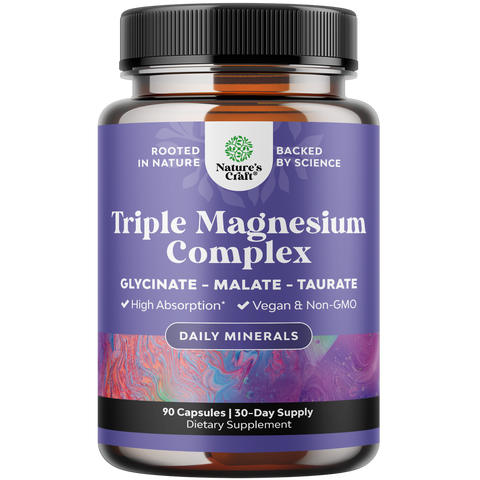
Nature's Craft Triple Magnesium Complex features three forms of magnesium:
Magnesium glycinate combines magnesium with glycine, an amino acid.
Magnesium malate contains magnesium associated with malic acid.
Magnesium taurate combines magnesium with taurine.
These compounds differ chemically, and their formulation characteristics may influence factors such as tolerability and absorption.
However, there is limited direct evidence that combining all three forms produces better health outcomes than an appropriately formulated single-form magnesium supplement.
The amount of elemental magnesium remains a central consideration.
This is the actual quantity of magnesium supplied, excluding the weight of the accompanying compounds.
Shoppers should compare the elemental magnesium amount per serving rather than relying exclusively on the total compound weight or the number of forms listed.
A Different Approach for Children

Children require magnesium for normal growth and development.
Their needs change as they grow, making age-appropriate nutrition particularly important.
Nature's Craft Kids Magnesium Gummies offer a chewable supplement format developed for children.
The gummy format differs from conventional adult capsules, but it doesn't eliminate the importance of reviewing the amount of magnesium per serving.
Children should not automatically receive adult magnesium supplements.
Their recommended intakes and supplemental upper limits differ by age.
For children ages four through eight, the recommended dietary allowance is 130 mg of magnesium daily from all dietary sources.
For children ages nine through thirteen, the recommendation increases to 240 mg daily.
These figures are not supplement dosage recommendations.
The upper limits for magnesium from supplements and medications must be considered separately.
Parents should consult a pediatrician before introducing magnesium supplementation, particularly when a child has medical conditions or takes medications.
What Gummies Change—and What They Don't
Gummy supplements provide a chewable alternative to tablets and capsules.
Their flavor and texture may appeal to people who prefer not to swallow pills.
However, the finished gummy includes additional ingredients that contribute to its structure, sweetness, and appearance.
Those ingredients deserve attention, particularly when selecting supplements for children.
The magnesium amount may also differ from conventional capsule formulations.
A gummy isn't automatically more effective or better absorbed because it is easier to chew.
The appropriate choice depends on the formulation, nutritional needs, and individual circumstances.
The Numbers Behind Magnesium Supplementation
 Recommended dietary allowances describe the amount of magnesium generally needed to meet the nutritional requirements of healthy people in a particular age group.
Tolerable upper intake levels serve a different purpose.
For magnesium, the established upper limits apply to supplemental and medicinal magnesium rather than magnesium naturally present in food and beverages.
Excessive supplemental magnesium can cause diarrhea, nausea, and abdominal cramping.
Very high intakes may cause more serious complications, especially in people with impaired kidney function.
Magnesium supplements may also interact with certain medications, including some antibiotics and osteoporosis treatments.
These considerations are relevant regardless of whether a supplement contains one magnesium compound or several.
A More Useful Way to Compare Magnesium Products
A product comparison becomes more informative when it focuses on the details that affect actual use.
For an adult triple magnesium formula, the elemental magnesium amount and individual compounds deserve attention.
For a children's gummy, age directions and serving amounts are especially important.
For any magnesium supplement, the complete ingredient list, other supplements, medications, and individual health circumstances should be considered.
For another perspective on whether combining multiple magnesium forms offers an advantage, read Three Forms of Magnesium in One Capsule. Is That Actually Better?
Different Formulations, Different Considerations
Nature's Craft Triple Magnesium Complex and Kids Magnesium Gummies represent different approaches to delivering an essential mineral.
One uses a multi-form capsule formulation intended for adults.
The other offers a chewable format for children.
Neither should be considered universally superior.
Magnesium's nutritional importance comes from its established role in normal physiological functions, not from the number of compounds listed on a label.
The appropriate supplement decision depends on whether additional magnesium is needed, how much is supplied, and whether the formulation is suitable for the individual.
At Nature's Craft, these distinctions help explain why magnesium supplements should be evaluated according to their ingredients and intended use rather than treated as interchangeable products.

